
 By
By 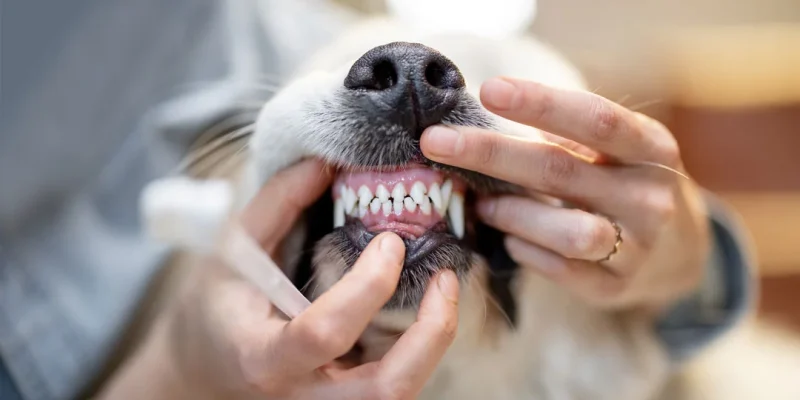
Most pet owners in Osseo, Maple Grove, and the surrounding Minneapolis suburbs notice bad breath and assume it is just a normal part of having a dog or cat. It is not. Persistent bad breath in pets is almost always a sign of active bacterial infection in the mouth, and that infection rarely stays confined to the gums. The relationship between dental disease and systemic illness in dogs and cats is well established in veterinary medicine, and it is one of the conditions Douglas Animal Hospital sees most often in patients who come in for something that seems entirely unrelated to their mouth.
By age three, an estimated 80 percent of dogs and 70 percent of cats have some degree of periodontal disease. That statistic tends to surprise pet owners, because most pets with significant dental disease do not appear to be in pain. They are still eating. Still playing. Still behaving like themselves. Animals are biologically wired to mask pain and vulnerability, which means dental disease is often severe by the time behavioral changes make it obvious.
What Periodontal Disease Is Actually Doing Inside Your Pet’s Body
Periodontal disease begins with plaque, the soft bacterial film that forms on teeth within hours of eating. When plaque is not removed, it mineralizes into tartar, a hard, porous deposit that provides an ideal surface for further bacterial colonization. As tartar accumulates at and below the gumline, the bacteria trigger an inflammatory response in the surrounding tissue. Gums recede. The ligaments holding teeth in place begin to break down. The bone of the jaw gradually resorbs.
That process is painful, but the more significant concern is what happens when the bacterial load in the mouth reaches a tipping point. The gum tissue is highly vascular. Chronic inflammation in the gums allows oral bacteria to enter the bloodstream regularly, a process called bacteremia. The kidneys, liver, and heart are the organs most commonly affected by this bacterial exposure over time.
Studies in veterinary medicine have documented associations between severe periodontal disease and kidney disease, hepatic changes, and endocarditis, an infection of the heart valves, in dogs. The mechanism is not fully proven in every case, but the pattern is consistent enough that veterinarians treat dental disease as a systemic health issue, not just an oral one. A pet with advanced gum disease is not simply dealing with a mouth problem.
The Signs of Dental Pain That Most Owners Miss
Because pets do not stop eating when their teeth hurt, the most obvious signal that a human would produce is absent. What owners do notice, when they know to look, is subtler. A dog that used to enthusiastically chew toys or bones but has quietly stopped. A cat that has shifted to eating primarily on one side of the mouth. A pet that flinches or pulls away when touched around the muzzle. Drooling more than usual. Dropping food while eating. Pawing at the face.
Behavioral changes are also common and frequently misattributed to aging. A dog that has become less playful, less interested in fetch or tug, or more irritable when handled may be managing chronic oral pain. Cats with dental disease sometimes stop grooming, become withdrawn, or show changes in litter box behavior. These changes happen gradually enough that owners adapt to them without registering that something is wrong.
The reliable way to assess dental health is a veterinary examination, not a visual check at home. Much of the damage in periodontal disease occurs below the gumline, where it is not visible without probing and, in many cases, dental X-rays. A mouth that looks acceptable from the outside can have significant bone loss and root exposure that only imaging reveals.
What a Professional Dental Cleaning Actually Involves
There is a meaningful difference between a professional veterinary dental cleaning and the anesthesia-free dental scaling offered at some grooming facilities and pet stores. Anesthesia-free scaling removes visible tartar from the crown of the tooth but cannot address the subgingival deposits, the bacteria and tartar below the gumline, where periodontal disease does its damage. It is also stressful for the animal and creates the appearance of a clean mouth without addressing the underlying disease.
A professional dental cleaning at a veterinary hospital requires general anesthesia, and that requirement exists for good reasons. The animal needs to be completely still for thorough scaling, probing, and rinsing to occur safely. Dental X-rays, which are essential for evaluating root and bone health, cannot be performed on a conscious animal. Anesthesia also allows the veterinary team to manage pain appropriately if extractions or other procedures are needed.
The procedure itself typically includes full-mouth X-rays, scaling above and below the gumline, polishing to smooth the tooth surface and slow plaque reattachment, probing to assess pocket depth at each tooth, and extraction of any teeth that cannot be saved. Pets recover quickly. Most are eating normally the same evening or the following morning.
What You Can Do at Home Between Professional Cleanings
Daily tooth brushing is the most effective home care strategy and the one with the strongest evidence behind it. Plaque takes 24 to 36 hours to begin mineralizing into tartar, so brushing every day disrupts the cycle before it can establish. Use a toothpaste formulated for pets, never human toothpaste, which contains fluoride and xylitol at concentrations toxic to dogs and cats. Introduce brushing gradually, starting with flavored toothpaste on a finger, then moving to a soft brush or finger brush once the pet is comfortable.
For pets who will not tolerate brushing, there are veterinary-approved alternatives with supporting evidence, including water additives, dental chews that carry the Veterinary Oral Health Council (VOHC) seal, and certain dental diets. These are not substitutes for brushing or professional cleaning, but they do provide a measurable benefit. The VOHC seal indicates the product has met accepted standards for plaque or tartar reduction in clinical trials, which is a more reliable bar than general marketing claims.
How Often Your Pet Actually Needs a Dental Exam
Annual dental exams are the standard recommendation for most adult dogs and cats, with professional cleanings scheduled based on what the exam reveals. Small and toy breeds tend to accumulate tartar faster and often need more frequent cleanings, sometimes every six to twelve months, because their teeth are crowded into a smaller jaw. Cats are prone to a condition called tooth resorption, where the tooth structure is actively destroyed from the inside out, which is painful and invisible without X-rays.
The cost of a professional dental cleaning, including anesthesia, is a point of hesitation for many pet owners. It is worth comparing that cost to the treatment expense for kidney disease, cardiac complications, or multiple extractions that become necessary when dental disease advances unchecked. Early intervention is consistently less expensive and produces better outcomes than addressing problems that have had years to develop.
Schedule a Dental Exam at Douglas Animal Hospital in Osseo
If your dog or cat has not had a dental exam in the past year, or if you have noticed any of the behavioral signs described above, a veterinary assessment is the right next step. Dental disease is progressive, which means the window for lower-cost, lower-complexity intervention narrows over time. Getting ahead of it is almost always easier than catching up to it.
Douglas Animal Hospital serves pets and their families in Osseo, Maple Grove, Brooklyn Park, Champlin, Dayton, and the surrounding northwest Minneapolis communities. Same-day appointments are available for your convenience. Call the clinic at (763) 424-3605, email info@douglasanimalhospital.com, or book online through the patient portal to schedule a dental exam or annual wellness visit. The team at Douglas Animal Hospital has been providing this level of care to the local community since 1983, and a healthy mouth is one of the most meaningful investments you can make in your pet’s long-term health.





Comments